Home Blog Page 94

Planet Fitness Haircuts (Review)

Some people go to the gym to get strong, keep fit, build muscle, and improve their health. Others go to get a haircut.

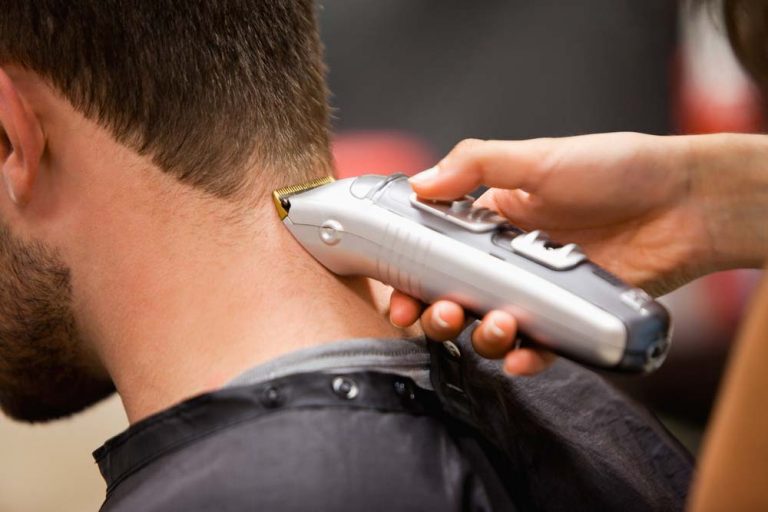
Yes, the rumors are true – you can get a haircut at Planet Fitness. Certain locations offer a cut as part of their spa / salon offerings, so you can go from sweaty to stylish in the same visit.

Sweat n’ Style…who knew! Continue on as we introduce our guide to getting a haircut at Planet Fitness.

How to get a haircut at Planet Fitness

If you have a Black Card membership and an untidy mane, you’re in luck – haircuts are free for all Black Card members.

Any cut, any style is included in your membership, so all you have to do is head over to the front desk and sign up for a spot in the salon.

Stylists may have limited hours, and there could be a waiting list, so if you do want a cut, it’s best to check their availability and plan your gym session accordingly.

Other members and guests may also be able to book a cut for an additional fee. Check with your local club to see if this is something they offer, and bear in mind that busy locations may have waiting times or limited hours.

Which Planet Fitness locations have haircuts?

Every Planet Fitness is different, and some don’t offer haircuts, so be sure to check with your club before heading out for your cut.

If you’re a Black Card member, you can use any of Planet Fitness’s 2,000+ locations, so even if your nearest club doesn’t do haircuts, you may find another in the area that does.

Either call your club or check their website – if they do haircuts, it’ll likely be listed under the Black Card membership perks.

It’s difficult to say for certain which locations are offering haircuts as the list can change. At the time of writing, the following handful of top locations were confirmed as having hair stylists. If you don’t see your club on the list, give them a call to double-check!

  • Albany (Crossgates Commons), NY
  • Albuquerque (Menaul And Carlisle), NM
  • Chicago (Washington Square), IL
  • Corpus Christi, TX
  • Glenmont, NY
  • Nashua (Coliseum), NH
  • San Antonio (West Side), TX

Reviews of Planet Fitness haircuts

So you’ve found a Planet Fitness that offers haircuts, but should you really trust your hair to a gym stylist?

No one wants a bad hair day after a great workout, so don’t be afraid to ask around and investigate before heading to the salon.

1. Take a look before you book

If you’re protective of your tresses, you can always meet the stylist beforehand and take a tour of the facilities to see what you think. Watch them at work, have a chat about what you want done with your hair, and go from there.

2. Ask others

If you have a Black Card membership, you’ve probably been going to the gym for a while and gotten to know the regulars.

Ask your fellow Black Cards what they think of the haircuts, whether they’ve ever had one or know someone who has. Find out if they think it’s worth it.

The more people you ask, the more informed you’ll be about whether you want to take advantage of this particular Black Card perk.

3. Read reviews

Your local Planet Fitness has its own website and social media following, and this is often a great place to find out what people think of its services.

Of course, it’s not the same as getting the opinion of someone you trust, but reviews can help you decide (or at least make you laugh!). Here are a few comments pulled from social media:

  • “Made my day – workout and free haircut at Planet Fitness!”
  • “Never get your haircut at Planet Fitness….like, what are you thinking?”
  • “Got a fresh haircut at Planet Fitness”
  • “Safe to assume if you’re getting your haircut at Planet Fitness you’ve given up on life.”
  • “I told myself I’d never get a haircut at Planet Fitness, but I’m broke and my hair is getting out of control”

In summary

So you’re thinking about booking a trim after training, but you’re still unsure. Should you chance it?

If you’re a Black Card member with a low-maintenance style, then why not? It’s free, and it’s hard to go wrong with a basic cut. Judging from the reviews, most people going for a cut at their club are men looking for a quick and simple style.

It’s hard to beat the convenience of heading straight from the gym to the salon if you want to look and feel your best heading home from your workout. And it could be a major cost-saver too if your usual haircut is pricey.

But if you’re planning anything more elaborate like a completely new style, a color, or a major cut, it’ll probably require a full-service salon.

So while you’re good to get a trim or a simple style, you might want to save any major make-overs for the professionals.

Haircuts are only one of the many perks available to Planet Fitness Black Card members, so if you decide to skip the stylist, there’s still plenty of other ways to pamper yourself after pushing through a hard workout.

LA Fitness Guest Pass, Policy, & Privileges

A gym membership is a big commitment, especially when household finances are tight and you have to work within a budget.

That’s why LA Fitness, a leader in the fitness space for almost four decades, allows you to try before you buy. The chain offers free guest passes to anyone who wants to get in a sample workout at any of their 700+ clubs across the US and Canada.

So if you’re in the mood to get fit, continue reading as we present some need-to-know info about LA Fitness guest passes, guest privileges, and guest policy.

What is the LA Fitness free guest pass?

With the LA Fitness free guest pass, you get to tour and use any of the LA Fitness clubs in the country…without paying for membership.

You can apply for the pass online then redeem it by visiting the location of your choice. The pass is available to anyone over the age of 18 (16+ with a signed waiver of liability or 13-16 with guardian present) and is valid for five days.

How do I get a LA Fitness free guest pass?

It’s really easy to get your hands on a free gym pass. Simply visit the LA Fitness website, find your local club, fill out a form, and the pass will be emailed to you.

Take your pass to your local gym, and an employee will activate it for you at the front desk – giving you five days to make the most of your freebie fitness.

What’s the LA Fitness guest policy?

LA Fitness’ free passes do come with certain conditions:

  • Passes must be redeemed in-person at one of the LA Fitness branches and are then valid for five consecutive days
  • Guests must present a picture ID at check-in to their club. A parent or guardian must sign a waiver for guests under 18, and guests aged 13-16 must be accompanied by a parent or guardian.
  • Passes older than a month are no longer valid – your pass must be activated within 30 days once it’s emailed to you.
  • There’s a limit to how many free passes you can claim, with a maximum of one per person every six months.
  • Amenities vary from club to club, and some services, like personal training, Kids Klub, and courts, may incur an extra fee.
  • The pass can’t be sold or redeemed for cash.

What privileges come with the free LA Fitness pass?

The free guest pass allows you to use most of the facilities in the club so you can get a good feel for the gym and whether you might want to join on a more permanent basis.

Upon arrival, guests will be asked to take a short ‘fitness analysis’ so staff can get an idea of their fitness level and ability and if they have any special needs or considerations. Then there’s a brief orientation session that explains the club’s rules, amenities, and any additional info you need to know before working out.

After that, the gym is yours! Explore, train, sweat as you please. There are various options, whether you’re looking to work solo, team up with a trainer, or join a class.

Depending on the club, LA Fitness group classes include:

  • Yoga
  • Cycling
  • Boot Camp Circuits
  • Cardio classes
  • Pilates
  • Senior sessions
  • Dance classes including Zumba, Hip Hop, and Latin

Personal training is also on offer. Staff can set you up with an experienced trainer who’ll help you safely reach your goals and work on your target areas.

Trainers also provide a fitness assessment service to determine your starting point, an end goal, and how you’re going to get there. This thorough analysis allows them to create a routine customized for you and support you with the vital motivation you need to stay the course!

Most LA Fitness locations also offer sporting facilities such as basketball or tennis courts and a swimming pool. Then there’s also the standard weights room, cardio equipment, stretching area, and locker facilities – nothing’s off-limits with a guest pass!

Other types of guest passes available at LA Fitness

Not sure that a free pass is the right way to go? Don’t worry; there are plenty of other ways to investigate LA Fitness before deciding whether full membership is right for you.

The 14 day VIP Guest Pass at LA Fitness

If you know an LA Fitness member, you can piggyback on their membership. Ask nicely, and a member can bring you along, courtesy of the gym’s VIP Rewards Scheme.

The program, which rewards longstanding members with extra perks, allows eligible members to send their favorite family member or workout buddy a 14-day VIP guest pass. They simply enter your contact details into their private and secure online account, and the gym will email you your VIP pass.

Members earn points on every referral who becomes a member themselves within 90 days, so you can show your thanks by joining up and sharing the love. Points can be redeemed for VIP rewards, including gym gear, headphones, and stainless steel water bottles.

To gift the passes, members must be 18 years or older, and their guests also have to be at least 18.

Family Member Pass

Your family can be your guests at LA Fitness… so if you have a basketball-loving brother, a sister who loves to swim, or a parent itching to try Pilates, this might be the better option for you.

Every LA Fitness member can add up to three family members to their account. Additional fees may apply, depending on the club.

VIP Guest Pass vs Free Guest Pass…which should I choose?

If you’re new to fitness, unsure about joining a gym, or just curious about a new club and its offerings, a guest pass is a great idea.

But there are so many other considerations to choose from that it’s often hard to figure out what will work for you.

The LA Fitness Free Guest Pass is ideal if:

  • You’ve never visited an LA Fitness before and want to get to know its services while experiencing the vibe of your local club.
  • You intend (and have the time!) to go multiple times in five days.
  • You like to exercise and explore the gym alone.

The VIP 14 Day Guest Pass is the one for you if:

  • You already know a LA Fitness member who’s keen to refer you and can show you the ropes.
  • You want more time with your pass – enjoying as many visits in 14 days as you can.
  • You’re probably going to become a member eventually – join up within 90 days and the friend who sent you the pass gets 1,000 points.

Whichever pass you go for, you now have the chance to exercise for free. So no more excuses…time to get off the couch and into the gym – better health is only a workout away!

Planet Fitness Guest Policy

Some things are better together… and exercise is one of them. Having a gym buddy can help you work harder, boost your motivation, and keep you accountable. 

Getting those gains as a group definitely gives you an edge, but it’s not always clear how accomodating your gym will be when you invite a friend.

If you’re a Planet Fitness member, you’re in luck! These popular franchises have a generous guest policy, allowing you to bring a buddy whenever you need that extra push. Continue reading to learn all you need to know about Planet Fitness’ guest policy.

Getting a Planet Fitness guest pass

First things first, if you want to bring a guest to your next sweat session, you’ll have to check your membership status.

Only Planet Fitness Black Card members can get guest passes, but these come with unlimited guest privileges. So it doesn’t matter if your friend wants to show up once a week or tag along every single day… they can work out as often as you do, thanks to your Black Card membership. 

Simply show up, sign them in, and get moving!

Planet Fitness guest rules / policy

Like any exercise studio, Planet Fitness equipment and facilities require following the gym’s rules and policies.

Have a best friend who’s itching to jump on the treadmill, a colleague who wants to show off in the squat rack, and a spouse who can’t wait to join a cardio class? They’ll have to take their turn – Black Card members can only bring one guest at a time.

Every guest must be over 18 (kids aged 13-17 are welcome to visit – if accompanied by a parent or guardian), and they don’t automatically have access to all the Black Card membership perks. Check with your gym to see what’s covered and what incurs an additional charge.

Also, bear in mind that some gyms limit class size and equipment use, so if it’s a particularly busy time, your guest may have to sit it out and come back when it’s not so crowded.

For a more streamlined booking process, download the Planet Fitness Mobile App. This easy-to-use platform allows you to set up your own account, log in, and send your guest an electronic invite.

The App notifies your guest that they’re invited and asks them to register via a short online form. They then receive a digital key tag allowing them to show up at their nearest club and enjoy fast, contact-less check-in.

Just like members, guests are expected to be considerate of other gym-goers and abide by the following rules:

  • Don’t leave gym bags or clothing on the gym floor, where it can trip up or intrude on other user’s space
  • Avoid revealing, offensive, or intimidating clothing
  • Keep personal items in a locker
  • Wipe down equipment after use
  • Return weights to their proper place
  • Store water bottles and other equipment safely out of aisles and walkways
  • Adhere to the Planet Fitness ‘judgment-free’ ethos – no critical comments, hostile or aggressive actions, confrontational behavior, or intimidation.

What are the guest perks?

Planet Fitness guests can use the gym’s wide range of cardio, strength training, and functional exercise equipment. There may be a limit on usage at times of high capacity, so it’s always a good idea to check with your local gym for any restrictions. 

Want to skip the crowds? You can check ahead via the Planet Fitness App thanks to its ‘crowd meter feature.’ The crowd meter will tell you at a glance if your local gym is filling up so you can head to another or save leg day for later in the week.

Planet Fitness has more than 2,000 clubs worldwide, and Black Card members with accompanying guests are welcome at all franchises (so you’re not stuck to one gym). If it’s too busy or not convenient, simply log into the app to find another club nearby and switch it up.

What if I’m not a Planet Fitness Black Card guest?

Don’t know anyone with a Black Card? You can still give Planet Fitness a try, thanks to its day pass scheme.

This allows non-members to purchase a day pass and enjoy full access to the facilities before deciding whether to take on full membership. If you decide to purchase a membership, the price of the day fee will go towards your membership dues, provided you join within 30 days.

Day pass guests must be over 18 and provide legal photo I.D at check-in.

Get fit with friends

Studies show that you don’t just enjoy exercise more when you work out with a friend; you’re also better at it.

Teaming up improves your performance and makes you more motivated. It also decreases your stress levels and encourages healthy, happy social bonding.

So next time you hit Planet Fitness for that awesome aerobics class, a challenging circuit session, or weight training marathon, enlist some company. Call a friend, drag your partner off the couch, persuade a family member to spot you…. give the gift of a Planet Fitness guest pass and treat yourself and your workout wingman (or woman!) to better health.

Wavelength of Red Light

Remember the last time you saw a rainbow? … Peeking through the clouds after a rainstorm, they’re a pretty sight.

At that moment, you weren’t just admiring the picturesque sky; you were looking at the visible light spectrum – all the colors we can see with the human eye, each with varying wavelengths and each having a different effect on our health.

Fortunately, medicine is finally catching on to the healing potential of the various wavelengths. Studies show that red light (at the end of the visible spectrum) can provide significant benefits for both our mental and physical wellbeing.

What is red light?

We’re all used to breaking out the suntan lotion when the warm weather comes – protecting ourselves against dangerous UVA rays that burn, damage, and age the skin. But not all light is harmful.

There are various shades along the visible light spectrum – blue, green, white, red – and they all penetrate our skin at different depths, affecting what’s going on below the skin’s surface and stimulating activity at a deeper level.

Red light occupies the ‘therapeutic window‘ where light emits at a wavelength that will work on our cells without causing damage. This window begins at around 600 nanometers (nm) and extends past 1200nm, where it becomes non-visible infrared light.

Long-wavelength red light

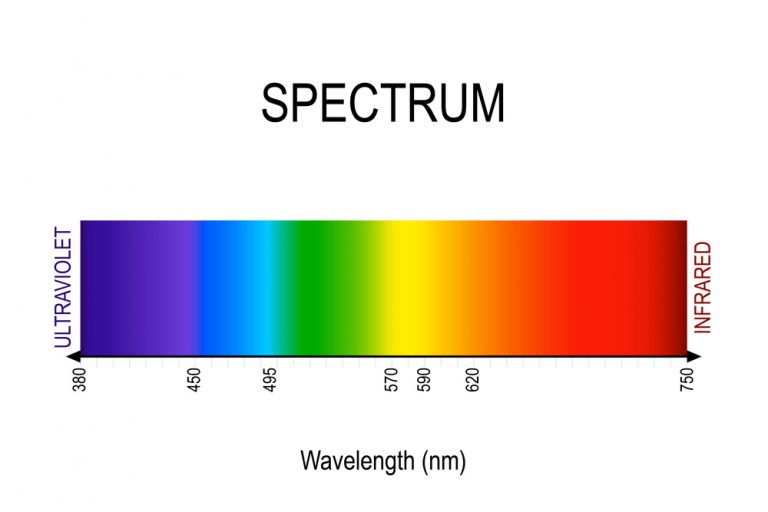
The human eye can see light with wavelengths between 380nm and 700nm.

Violet has the shortest wavelength of 380nm, while red light falls at the end of the spectrum, with longer wavelengths of 630nm to 700nm. Go beyond 700nm and you won’t see the red, but you can still feel the energy from those longer wavelengths (known as infrared) in the form of heat.

What is red light therapy?

Red light therapy involves using red light to treat certain health issues. 

Exposing our bodies to red light allows the longer wavelength rays to penetrate the skin and activate our cells – to heal, restore, and repair. 

It works by targeting our mitochondria, the ‘control center’ of our cells, which give the cells the energy they need to perform their biological functions. 

When mitochondria receive a dose of red light, they encourage the cells to produce more energy – energy used to repair damage, promote new growth, and/or improve their function.

Red light therapy goes by several names; you might also see it referred to as:

  • Photobiomodulation
  • Low-level Light Therapy (LLLT)
  • LED treatment
  • Cold laser therapy
  • Biostimulation

Red Light – Longer wavelengths, better health

The potential of red light was first discovered in the 1990s when biologists used red-light emitting LED lights to grow plants in space. 

Noticing that the plants responded extremely well to the red light (with the longer wavelengths stimulating photosynthesis and causing rapid but healthy growth), scientists began to wonder if they would have a similarly rejuvenating effect on astronauts, who faced many health challenges thanks to prolonged periods of weightlessness.

NASA began photobiomodulation trials, known as WARP (Warfighter Accelerated Recovery by Photobiomodulation), and the results were encouraging. They found that red light could provide relief for exhausted and depleted astronauts, treating their arthritis, muscle spasms, and stiffness, as well as increasing blood circulation.

Armed with this knowledge, NASA began expanding their use of red light therapy from astronauts to military applications for soldiers on the frontlines.

What can red light therapy be used for?

Fuelled by the buzz at NASA, red light treatments began attracting attention and now show promising results in clinical studies. It’s also been embraced by the alternative health community, where many appreciate the natural aspect of this therapy and how it gently activates the body’s own self-healing functions rather than relying on medications or surgical intervention.

NASA’s WARP technology uses wavelengths around 670nm, but science is now exploring the benefits of the entire red-light range (630nm to 700nm). In these wavelengths, three major effects are seen:

  1. Anti-inflammatory action
  2. Analgesic (pain relieving)
  3. Healing and repair of wounds

All three have big implications for our health, so let’s dive a little deeper…

611 – 650 nm 

Red light at the 611-650 wavelengths has been used to improve skin health, smoothing fine lines, rough spots, and wrinkles for a better complexion.

By stimulating collagen production in the skin cells, the longer-wavelengths “significantly” improved skin’s firmness, thickness, and appearance. It’s also been used to treat cellulite, stretch marks, acne, and other skin conditions such as psoriasis and rosacea.

Low-level light doesn’t just wake up the skin; it can also give our brain a boost, making us more focused and improving concentration. There’s evidence it can increase alertness and performance – night shift workers exposed to 630nm red light were more awake and did better in daily tasks than the control group in one study.

650nm – 700nm

Red light within this slightly higher range can:

  • Reduce inflammation and encourage wound healing by driving cell repair.
  • Encourage hair growth – at 655nm, red light can stimulate hair growth, mitigating the effects of hair loss and providing a potential treatment for follicle disorders such as alopecia, pattern baldness, and thinning.
  • Help you sleep better – One study showed red light with wavelengths of around 658nm improved sleep quality and helped combat insomnia. 
  • Smooth out scars and encourage skin repair – in one clinical trial, burn victims reported reduced scarring and less pain after treatment with 670nm LED light.

Infrared wavelengths

The terms infrared therapy and red light therapy are often used interchangeably, which gives rise to a lot of confusion! 

Simply put, infrared is the light outside the visible spectrum, above 700nm. You can’t see it, but you might be able to feel it and your cells certainly know it’s there.

Light at these longer wavelengths is also profoundly healing with the following benefits:

How to get your red light therapy

It’s now easier than ever to get your healing red light with many new technologies coming into the market. 

You can visit a salon for a relaxing and rejuvenating red light sauna that lets you sweat away toxins while getting a good dose of red light on large areas of skin. These are great for mood disorders such as depression, sleep issues (like insomnia), and fending off sickness by giving your immune system a boost.

If a salon’s not your thing, you can combine a workout with red light treatment by heading to the gym. More and more fitness centers offer red light therapy for skincare, muscle aches and pains, and joint stiffness or soreness. 

Planet Fitness, for example, now offers the Total Body Enhancement machine (also known as the Beauty Angel). This stand-up red light chamber resembles a tanning booth and allows users to get exposure to red light in a private, safe environment that provides whole-body healing.

If you’d rather get your therapy in the comfort of your own home, check out the many handheld or portable devices available. These include:

Devices like these allow you to direct your own therapy – deciding when and where to get your treatment. 

Easy to use and convenient, you can soak up some rays as part of your energizing morning routine, sneak in a session at lunch to give you a lift, or take time before bed to relax and soothe your system.

In summary

Only you (and hopefully your doctor) know what’s right for you and your body. Red light therapy is a non-invasive and natural solution for all kinds of health issues, but for targeted treatment, it’s always a good idea to do your research and know exactly what you’re looking for.

Different wavelengths can have different effects, so when using devices, be sure to pick the best option for your health goals. Read and follow all instructions carefully and keep a consistent schedule to maximize results.

Red Light Therapy for Cellulite

Cellulite is one of the most common skin complaints. So common, in fact, that for many women (and even men!), it’s just a fact of life. You may have tried all the creams, completed all the dry brushing, and even bought the very best exfoliators… only to find that those stubborn marks remain. 

While it’s always great to embrace the skin you’re in, cellulite can affect your body image and your confidence. Fortunately, you don’t have to learn to live with dimpled, sagging skin. Red light therapy offers a natural, gentle way to shrink, smooth, and lessen those unsightly marks, all while improving your skin’s texture and tone.

Sound interesting? Continue reading to learn how infrared treatment can smooth and tone cellulite.

What is cellulite?

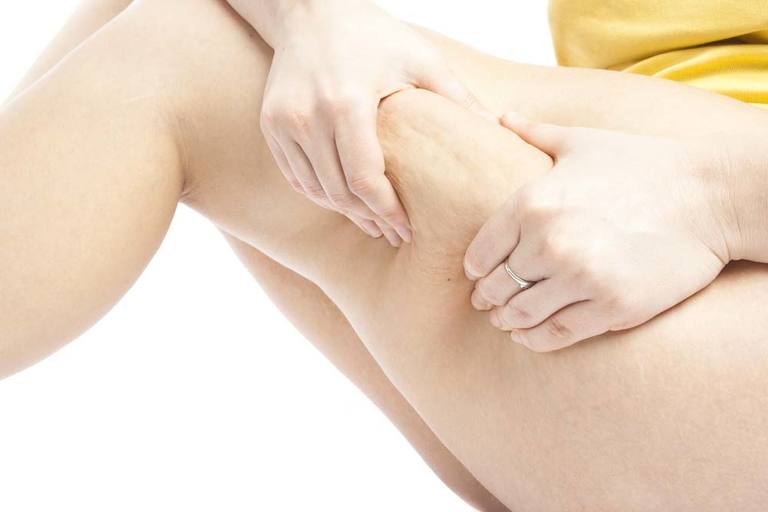
Around 90 percent of women and 10 percent of men have cellulite. This irksome condition is instantly recognizable – dimpled, lumpy, and rough-looking skin (also known as ‘orange peel’). It’s hard to miss and even harder to treat.

Orange peel skin usually shows up where we store our fat, i.e., stomach, butt, thighs, and buttocks. Yet, while it may appear in our trouble spots, it’s not actually fat. 

Cellulite occurs when there’s a breach in the barriers between the various levels of the skin. If you think of your skin as scaffolding, there’s a lot of structural work going on beneath the surface – first, there’s the layer closest to the skin’s surface and then a deeper layer of fatty tissue.

If the fatty tissue breaks through and bulges around the connective tissue holding it in place, it shows up as the pocked, uneven skin we know as cellulite.

So what causes cellulite? While it’s typically hard to pinpoint one specific cause (as cellulite can occur for all sorts of reasons), here are some common culprits:

  • Aging – as our body’s first line of defense, our skin takes a lot of wear and tear over the years. The older we get, the more damaged our skin becomes.
  • Sun damage – harmful UV rays can penetrate our skin and damage it.
  • Loose skin – the skin’s texture naturally changes throughout our lives, directly influenced by how well we look after it. Loose skin means loose connective tissue, which can contribute to cellulite.
  • Diet and lifestyle – we are what we eat, and unfortunately, people with a poor diet are more likely to have cellulite. The same is true for smokers, people who are mostly sedentary, and anyone suffering from obesity.

While cellulite is perfectly normal and painless, it can have a huge impact on our self-esteem. Being self-conscious can make activities like swimming, going to the beach or the gym, and even simply wearing summer clothes a nerve-wracking, embarrassing, and daunting experience. 

The good news is that cellulite is treatable. Whether you’re dealing with mild, moderate, or severe cellulite, exposing your ‘cottage cheese’ skin to infrared light can help it look and feel significantly better. 

What is red light therapy?

Red light is light with longer wavelengths than blue or white light. It’s safe, painless, and doesn’t damage the skin like UV rays. You don’t have to worry about burning or over-exposure – infrared light is gentle and well-tolerated. In fact, studies show it can actually provide a powerful boost to skin health, encouraging our cells to repair, restore, and rejuvenate.

In a red light therapy session, users sit under an infrared light source to expose the body’s affected part to the healing rays. The type of red light used generally falls in the so-called therapeutic window between 650 and 850 nm. 

It’s worth mentioning that red light treatment goes by a variety of names. You may have also heard it referred to as:

  • Low-level light therapy (LLLT)
  • Photobiomodulation
  • Laser therapy

Whatever you prefer to call it, red light therapy is becoming a well-recognized medical tool for many common health issues (from insomnia to arthritis). And yet, as we’ve mentioned, one key area where it’s really proving its worth is in the treatment of skin. 

Red light helps with various skin conditions, including acne, psoriasis, eczema, stretch marks, and, yes, cellulite!

Does red light therapy really work on cellulite?

When you sit under an infrared lamp, there’s a lot more going on than you’d think. This unique therapy improves cellulite in several ways:

1. Red light therapy tones, smooths, and firms skin

Our skin relies on collagen, the building block protein of our connective tissue. Collagen is what keeps our skin supple and elastic, so it can bounce back from any damage and retain its soft feel and texture. When cellulite forms, it’s often a sign that we don’t have enough collagen. 

Red light stimulates collagen production, leading to an increase in intradermal collagen density. The result is firmer, thicker skin with less cellulite. 

2. Red light therapy helps with weight loss

While weight isn’t the only predictor of cellulite (plenty of slender women and men have it), obesity is one of the popular suspects when identifying a cause. Carrying around extra weight puts a strain on every part of the body, including the skin.

Red light can help target fat cells, shrinking the adipose tissue to make us leaner and more toned. In one study, participants noticed a reduction in their body fat and a better body shape, indicating that red light also helps tone and contour those areas most prone to cellulite by firming up the skin. 

3. Red light therapy improves circulation

Poor circulation may not be the first thing you think of when it comes to cellulite, but this common issue does play a role in cottage cheese skin.

Our circulation is vital to our survival. Blood rushes around our body, delivering oxygen and nutrition as it goes. Our skin needs a healthy supply of blood and nutrients to stay strong and elastic. 

Red light significantly improves skin blood flow, reducing your risk of developing cellulite, as well as encouraging existing orange peel skin to repair itself.

4. Red light therapy helps damaged skin cells regenerate

There’s plenty of evidence that blasting our skin with red light sends a powerful message to our cells… to repair and heal.

In one study involving over 100 volunteers, those exposed to infrared light reported improvements in skin complexion and feel and a reduction in visible lines and roughness. 

Why? Because the longer wavelength light penetrated the skin to stimulate the cells active in regeneration and repair – fibroblasts, keratinocytes, and immune cells. Switching these all-important cells ‘on’ encourages repair deep within the skin layers for lasting results.

How do I use red light on cellulite?

Whether you’re researching red light therapy to help beat cellulite before it develops or looking for an effective remedy after you’ve already noticed bumpy skin, the treatment is widely available and accessible for everyone.

You can drop into a salon or spa that offers the treatment (some people like to combine their red light therapy with a relaxing session in an infrared sauna) or seek a therapist who can give you targeted treatment on a specific area. You can also choose a portable LLLT device to use at home. 

LED lamps, wands, or handheld torches… there’s plenty to choose from so you can pick a product that matches your lifestyle and your budget. If you want to venture into something a bit more innovative, there are also many wearable technology options (such as an LED face mask) specifically created for skin issues.

How often should I use LLLT?

One study suggests using LLLT twice weekly for six weeks if using red light to firm skin, tone trouble zones, and lose weight.

That said, it’s always imperative to develop a treatment plan that specifically works for you. The best therapy is the one you’ll do consistently, so if two sessions a week don’t suit your schedule, aim for something more manageable.

Red light is gentle (and generally very low-risk), so there shouldn’t be much of a concern about overexposure. Just be sure to carefully follow the instructions if using a device, and consult with your primary caregiver if unsure whether the treatment is right for you.

In conclusion

Conventional skin rejuvenation treatments for cellulite, such as cosmetic surgery and other medical procedures, are generally time-consuming, expensive, and carry some degree of risk. There’s the trauma of surgery, which is often accompanied by pain, inflammation, and some serious recovery time. Or you might try creams or supplements…, but these are often unreliable, with a minimal noticeable difference or results.

By contrast, red light treatments are a tried and tested holistic alternative that can bring genuine results. Quick, non-invasive, and very convenient, infrared is a natural route to firmer, stronger, healthier skin. 

Best of all, you don’t have to rely on medications or medical interventions – by stimulating your own innate self-care mechanisms, you’re letting your body do what it does best… heal!

Red Light Therapy for Stretch Marks

Our skin is a visible reminder of what we’ve been through in our lives. Trauma, injury, pregnancy, disease… even what we’ve eaten and where we’ve lived – it all shows up on the body in the form of lines, scarring, lumps, bumps, sunspots, and, yes, stretch marks.

While true beauty comes from within, there’s no denying that imperfections on your skin can get you down. In some cases, it can really knock our confidence, causing anxiety, depression, and stress. 

If you’re looking for a gentle, natural solution for stretched skin, infrared light therapy (also known as low-level laser therapy (LLLT), can help. This non-invasive treatment penetrates the skin to rejuvenate dermal cells, leading to silky smooth skin that glows from the inside out. 

Sound intriguing? Continue reading to learn how infrared light can erase marks and imperfections for healthier, happier skin.

What are stretch marks? 

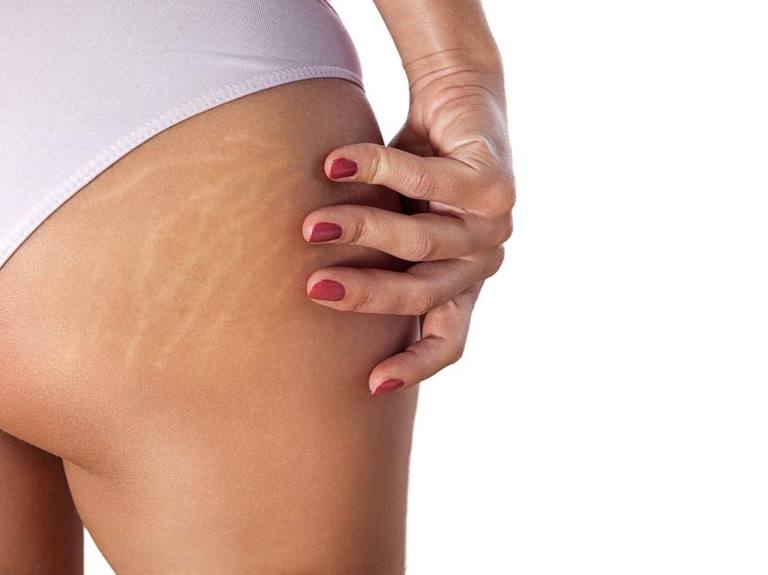
Simply put, stretch marks are a type of scar caused when the skin expands too rapidly, stretching the proteins that make up our dermis and causing the skin cells to rupture and tear. The body activates its healing mechanism to close up the tear, but it’s working in a hurry – more concerned with mending the injury to keep out infection than how it looks. 

The result is a shiny, silvery area of scar tissue that may fade over time but is very unlikely to disappear completely. 

Stretch marks can be red or white. They may become irritated, sore, and/or itchy. While stretch marks generally occur on the denser parts of the body, such as the belly, thighs, and butt, they can happen anywhere.

Stretch marks are commonly associated with pregnancy but, the truth is, they can appear for all sorts of reasons – growth spurts, muscle gain, etc. Another common cause is weight loss or weight gain. Sometimes our waistline changes so fast our skin can’t keep up. 

Piling on the pounds in a short span of time can also stretch the stomach, giving those tell-tale tiger stripes, just as dropping weight rapidly (via dieting or weight loss surgery) can leave us with loose skin that struggles to tighten up.

How are stretch marks treated?

Remedies for stretch marks vary, and results are notoriously inconsistent. You might try any of the millions of cosmetics products on the market for scars – body scrubs that promise to eliminate stretch marks within weeks, supplements claiming to reduce scarring, special teas, and tinctures. And despite the plethora of available options, by the end of their treatment, most people find they’ve merely shrunk their wallets more than their stretch marks!

You may even have come across a diet that claims to banish stretch marks for good or a new workout routine to target those stretch mark-prone problem areas. Don’t be fooled – while healthy lifestyle changes do have the power to transform your overall health, the chances of them eradicating your scars forever is slim to none.

Ok, so what about medicinal creams? The most popular of these is retinoid cream for stretch marks. These ointments stimulate collagen in the skin cells but are only effective if used at the earliest stages and, even then, results can vary.

Some sufferers turn to cosmetic surgery, but this isn’t for everyone. Every surgery comes with risks; procedures can be expensive and require a lot of preparation and recovery time.

Thankfully, there’s a safer, non-invasive, less expensive treatment available – red light therapy. 

Who would have thought that simply sitting under a special red light-emitting device could reduce the appearance of stretch marks and encourage natural healing deep within the skin layers? In fact, in one study, infrared light treatment outperformed topical oils and creams – giving better, longer-lasting results when used to reduce stretch marks.

How does red light therapy help stretch marks?

Exposure to infrared light works on stretch marks in many different ways to ensure your skin gets an all-natural, healthy boost that leaves it feeling (and looking!) better than ever.

Red light operates on a lower wavelength than white or blue light, which means it can penetrate further into the skin without damaging it. Our cells respond well to this kind of light, taking in the energy to repair and restore any wear and tear– particularly to the skin.

So how exactly does red light therapy work for stretch marks?

1. Red light therapy repairs damaged tissues

Red light activates stem cells – the building blocks of our body that can repair and heal damage. Exposing our cells to LLLT can actually encourage tissue regeneration, helping with wound healing, acne, and scarring.

2. Red light therapy improves skin tone and texture

There’s a reason red light therapy is a popular anti-aging treatment. It’s clinically proven to reduce lines, wrinkles, and all those spots, rough areas, and pigmentation patches that occur as we get older. 

Given its established use as a natural cosmetic treatment, it’s no surprise that infrared light is showing tremendous promise as a way to smooth out scars like stretch marks, reducing that bumpy, uneven surface and making them less visible.

3. Red light therapy increases collagen production

Research shows that LLLT encourages our skin cells to release collagen – one of the most important proteins for skin health. Collagen is responsible for our connective tissue, helping keep our skin supple, flexible, and looking healthy.

4. Red light therapy restores skin’s thickness

Exposure to red light doesn’t just repair our skin; it makes it thicker and firmer. How? By increasing its elasticity and restoring the elastin fibers that make it strong and supple. 

Does it really work? Stretch marks before and after red light therapy 

Red light therapy really does lessen stretch marks and improve the look of the skin. But don’t just take our word for it…have a look for yourself!

Several studies confirm that red light treatment produces visible results… sometimes in just a matter of weeks. In one trial, both patients and doctors noticed the difference, with satisfied participants reporting better quality of life and more satisfaction with their bodies afterward.

How can I use red light therapy for my stretch marks?

Red light treatment isn’t just safe and effective; it’s also extremely convenient thanks to the number of available options on the market as this popular treatment enters the mainstream.

There are plenty of easy-to-use red light devices for you to choose from, from LED lamps to handheld heaters. Pick what’s right for you to get your therapy in your own home, on your own time. With home, personal devices, you can fit in a red light session after breakfast, while the kids nap, even when watching a movie. It couldn’t be easier! 

Of course, you always have the option to visit a salon or spa to get your treatment – if you prefer to have an experienced professional on hand to administer it. If that’s the case, there are plenty of salons now offering infrared saunas or appointments if you want to target certain areas and have a more one-on-one service.

You can also pop down to your local gym (more and more are starting to offer red light) to fit in your therapy after a workout. Planet Fitness now offers infrared therapy via its Total Body Enhancement machines, available at most Planet Fitness franchises. 

The machine, also known as the Beauty Angel, resembles a stand-up tanning booth. It’s an enclosed pod that lets the light hit all areas of your body at once, making Planet Fitness an ideal place to get your red light therapy for stretch marks.

Is red light therapy safe to use?

Infrared light is safe and generally well-tolerated, regardless of age or health. 

Also, if you’re pregnant and wondering if red light therapy will be safe for you and your baby, don’t worry. Studies indicate that this type of treatment is, in fact, safe during pregnancy, yet if you still have concerns, it’s definitely worthwhile to check with your primary caregiver.

Overall, red light therapy is considered low-risk with minimal chance of adverse reactions. It’s gentle, quick, and pain-free. At most, you may feel a relaxing warm sensation as the light gets to work. There’s no recovery time, no special preparation, and, best of all, no side effects.

In summary

Catch your stretch marks early with a blast of red light, and you may very well gain the upper hand on an otherwise nagging condition. Even if they’ve been hanging around for a while, this healing therapy can work wonders – reducing redness, smoothing lines, repairing damage, and giving you stronger, tougher, healthier skin.

So ditch the quick fixes that never measure up, and don’t rush into surgery or fall for the latest ‘magic’ cream – give your skin a regular dose of all-natural red light and watch those maddening marks melt away!